Building a Mommy & Me Capsule: Matching Fabric Across Adult and Kids Sizes
A Mommy & Me set is a fabric problem, not a merchandising idea. Adult and children's pieces need one material plan or the match breaks in photos. Build the patterns side by side and the set stays aligned.
- Plan: one fabric & colour spec.
- Comfort: kinder base for baby rarely breaks the match.
- Blocks: adult, kids, baby built together.
- MOQ: 50 pcs/style/colour; ~7 days sample.
- Terms: 30% deposit, AQL 2.5.
Bottom line: match in the plan, develop together, list sizes separately.
A Fabric Problem, Not a Merchandising Idea
A Mommy & Me set looks like a merchandising idea. In production it is a fabric problem: the adult style and the children's style have to come from one material plan, or the set stops matching the moment they sit next to each other.
These sets sell on a single promise—that the two garments read as one family. A shade that is half a tone off, a print placed a few centimetres differently, a trim that catches the light in a different way: each one is invisible on a spec sheet and obvious in the photograph that sells the set.
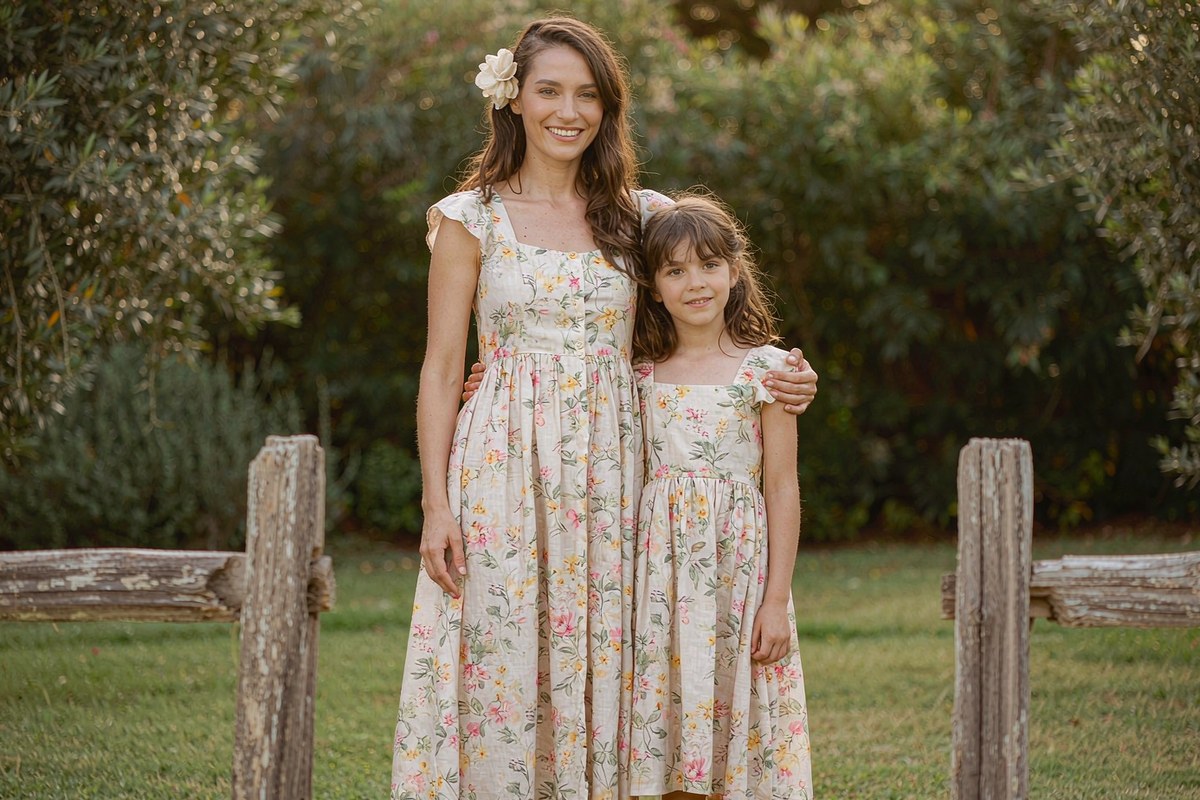
The whole proposition is the pair: colour, print and scale have to read as one family in a single frame.
One Fabric Plan vs Separate Sourcing
The set only works if the adult dress and the children's version start from the same fabric specification. Sourcing them separately—even from the same supplier—invites a shade difference that reads instantly in a photograph, which is exactly where these sets sell.
| Decision | Sourced separately | One shared fabric plan |
|---|---|---|
| Colour | Shade drifts between lots | One dye standard across the set |
| Print placement | Differs between adult and kids | Placement locked across sizes |
| Shrinkage | Each piece behaves differently | One pre-wash spec for the range |
| Trim & finishing | Chosen per garment | Same trim and finish throughout |
| Re-order | Set can fall out of match | Reference sample keeps the match |
So the material plan comes first. Fabric intent is set for the whole set, the adult pattern is developed, and the children's and baby patterns are graded from the same specification so that seams, trims and finishing stay consistent.
Fabric Choice for Baby and Toddler Pieces
Pure cotton is usually the right base for the children's pieces even when the adult style uses a cotton-linen blend. It is softer against skin, it creases less, and it survives the washing a child's garment will actually receive.
If the adult style is in a blend for its structure, the children's version can still match visually through colour and detail while using a kinder base. Matching is a perception judgement—colour, print and trim do most of the work, and a slightly different ground fabric is rarely noticed beside the comfort gained.
For anything worn next to a baby's skin, we work to the fabric standard the buyer specifies and share the mill's test records for the chosen cloth. We do not hold third-party certificates ourselves; when a specific certification is required, it is specified at the fabric stage and verified with the mill before bulk.
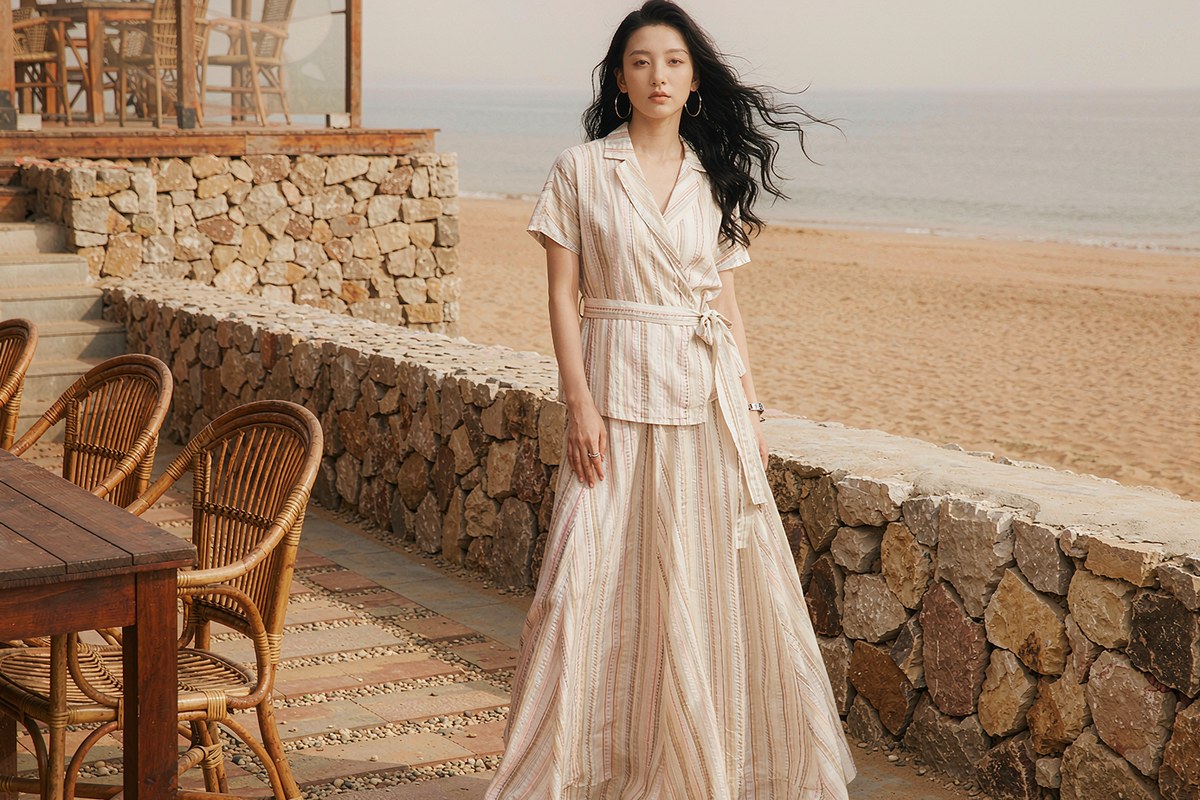
The adult style anchors the set; the children's version is developed around its fabric and colour, not sourced to look similar afterwards.
The Six-Point Set Checklist
Before a matching set goes into development, these are the six parameters we ask a brand to lock. They are what keep an adult piece and a children's piece reading as the same product line:
Fabric batch & mill
One source and one lot plan for the set, so shade and hand-feel start identical.
Colour / dye standard
A single approved standard that every size and piece is measured against.
Pre-shrink & wash
One shrinkage spec across the range; child garments are washed far more often.
Care label & safety standard
State the buyer's required standard for children's pieces at the spec stage.
Print / embroidery placement
Fix the placement so the motif reads identically on adult and child.
Size ratio & age bands
Plan the adult size curve and two or three children's age bands together.
A supplier who quotes the adult dress and the children's dress from two separate fabric stories is not building a set—they are building two similar dresses that will drift apart on the shelf.
Grading the Adult Style into Children's Sizes
A children's pattern is not a shrunk adult pattern. Proportions differ, fastenings have to be reconsidered because a parent dresses the child more often than the child dresses themselves, and anything near the neck has to be designed for comfort rather than for fit photographs.
Neck openings, sleeve heads and hems all need their own logic at children's scale. A neckline that looks elegant on an adult can be a safety and comfort problem on a toddler; a closure that is easy for an adult to manage can be impossible for a parent working against a squirming child. These are pattern decisions, made before fabric is cut.
Because the development happens in our in-house pattern team, the adult and children's versions are built side by side rather than sequentially, which is what keeps the set aligned. A shared specification means a change to the adult style can be reflected in the children's version in the same round, not two weeks later.
Sequential development is where most sets drift. When the adult dress is approved first and the children's version is handed to a different table weeks later, small decisions diverge: a neckline eased slightly, a print nudged for a smaller panel, a trim swapped because the original was not available at that scale. None of these is wrong on its own, but together they break the one thing the customer is buying—the sense that the two garments were made as a pair. Building them in the same round, against one sealed reference, is how that drift is prevented rather than corrected later.
GSM & Fabric by Size Band
CHURELLE works in a GSM band of 80–220 for woven dress cloth. In a matching set, the weight is chosen for the whole range and adjusted by size band where comfort calls for it:
| Size band | Typical GSM | Preferred base | Why |
|---|---|---|---|
| Adult | 120–180 | Cotton or cotton-linen | Structure and drape hold the intended silhouette |
| Kids | 120–160 | Plain cotton | Soft, wash-stable, holds colour with the adult |
| Baby & toddler | 80–140 | Soft plain cotton | Skin comfort and frequent washing come first |
The exact grammage is confirmed before dye, because it changes both hand-feel and cost. The point of listing the bands together is to make the trade-off explicit: the set matches on colour and detail, while the base cloth can be tuned for the body wearing it.
Merchandising the Set
Production alignment is only half the job. How the set is listed determines whether it sells as a set and stays sellable as children grow:
Sell as a set, list separately
Pair them in the hero shot, but list children's pieces on their own so a single size can be replaced as a child grows.
Photograph real pairs
Use real adult-and-child pairs where possible; scale is the whole proposition of the set.
Lock print placement
Keep embroidery or print placement identical across sizes so the family reads as one family.
Plan the size architecture
Adult in the usual size curve, children's in two or three age bands, from the same fabric plan.
Send the adult style you already sell and the matching children's version can be developed around it, from one fabric plan.
Matching-Set FAQ
Can adult and children's pieces use the exact same fabric?
They can when the specification allows it, and that is the cleanest way to hold a match. Often the children's piece uses a kinder cotton base while the adult style uses a blend—the colour, print and trim keep the visual match, and the child gets a softer, more washable garment.
What safety standard applies to the children's pieces?
We work to the standard you specify for the destination market and share the chosen fabric's mill test records. We do not claim third-party certification ourselves; if a specific certificate is required, it is agreed at the fabric stage and verified with the mill before bulk.
How is the minimum order calculated for a set?
MOQ is 50 pieces per style per colour. Because the adult and children's garments are separate styles, each is counted on its own quantity; the shared fabric plan is what keeps them a set. We break the exact split out in the quote after seeing the size bands.
Does developing a set double the lead time?
No—the adult and children's patterns are developed side by side in the same pattern team, so the set moves as one development round rather than two sequential ones. A first sample is about 7 days; bulk runs 20+ days after approval. The extra work is coordination in the plan, not a second production cycle.
Bottom Line
A Mommy & Me set is won in the material plan and lost in separate sourcing. Set one fabric and colour standard for the whole range, give baby and toddler pieces a kinder base where comfort calls for it, build the adult and children's patterns side by side, and list the sizes so the set keeps selling as children grow.
Developing a Mommy & Me collection?
Send the adult style you already sell plus your target age bands. We return a fabric-and-size plan with MOQ within 24 hours.
Develop a Matching Set