Why We Built an Atelier Instead of Another Mega-Factory: The CHURELLE Story
A mega-factory is built for repetition; a dress atelier is built for change. The real cost is not unit price—it is cash locked in stock that never sells.
- MOQ: 50 pcs/style/colour, not 500–1,000.
- Cash: 1,000 pieces tie up $15,000–$25,000+.
- Deadstock: 30%–50% on unproven designs.
- Craft: hand-laid cutting and in-house sample-makers.
- Terms: ~7 days first sample, 30% deposit, AQL 2.5.
Bottom line: test small, read the signal, reorder what sold.
The High-Volume Trap: Why Independent Dress Brands Bleed Cash
Here is the blunt truth every emerging dress brand learns the hard way: the traditional apparel supply chain was built to serve retail conglomerates, not independent design houses. If your production model depends on mega-factories demanding 1,000-piece minimums per colourway, you are not scaling—you are gambling your working capital on deadstock.
Standard garment manufacturing runs on efficiency through repetition. Giant automated cutting tables cut a hundred plies of fabric in seconds, and assembly-line operators stitch identical side seams on thousands of identical garments a day. That framework collapses the moment it meets premium contemporary dresses.
Dresses are emotional, structural and architecturally demanding. Put a bias-cut slip dress, French seam finishes or asymmetrical pleats in front of a conventional factory and it will balk, then respond in one of two ways:
Raise the minimum
Slap on a 500- to 1,000-unit minimum per SKU to offset its tooling friction.
Hide the risk
Accept the job, route it to an unmonitored sub-tier line, and deliver samples with puckered zips, mismatched prints and uneven drape.
McKinsey's State of Fashion reporting has put overproduction at roughly 20% to 30% of total fashion output—deeply discounted or landfilled. For an independent dress label turning over $500K to $3M a year, sitting on 600 unsold units of an intricate midi dress is not an inventory headache. It is an existential cash-flow crisis.
We realised early that independent labels did not need cheaper mass production. They needed technical agility.
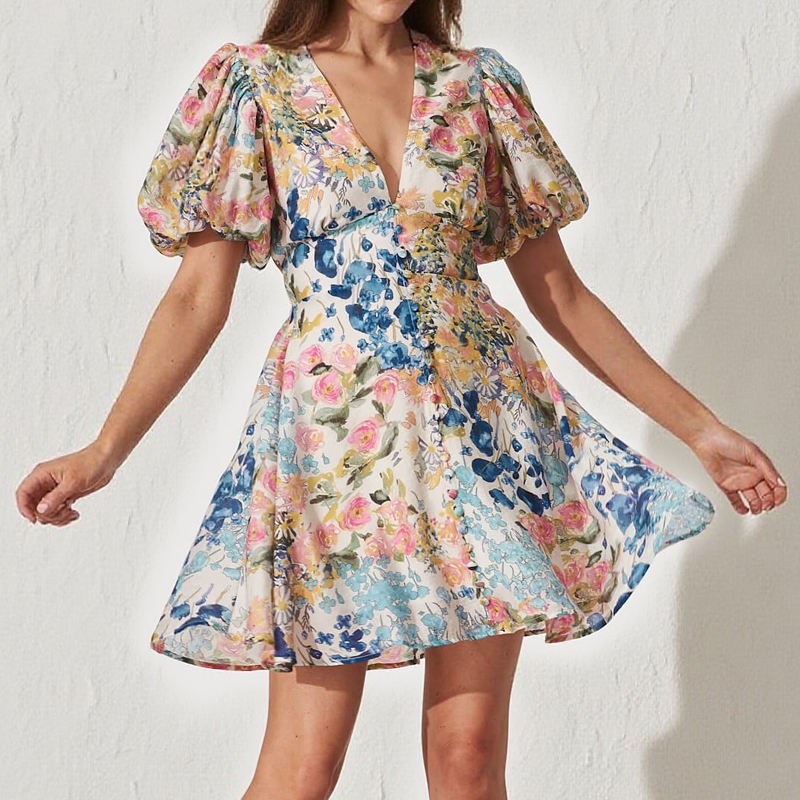
Structural, print-heavy styles are exactly where a repetition line starts to balk.
The Genesis of CHURELLE: Anatomy of an Atelier
CHURELLE came out of a simple realisation on our own production floor: cutting a bias-cut dress requires an entirely different sensory discipline than sewing athletic wear or bulk streetwear. So we separated the studio entirely from high-speed bulk lines. We stocked it with single-needle flat beds, blind-hem stitchers and delicate rolled-edge overlockers—and, most importantly, with patternmakers who have spent more than two decades working with fragile, shifting textiles.
What makes CHURELLE different in custom dress manufacturing
Tension-controlled cutting
Delicate silks, rayon viscoses and cupro shift with humidity and table drag, so our artisans hand-lay and pin drape fabrics to hold grain alignment before a single yard is cut.
Master sample-makers on the floor
The person who engineers your golden sample guides the production pod, so the nuance of a hidden internal bustier or a French seam is never lost between development and bulk.
Agile batch runs from 50 pieces
Our sewists are cross-trained across construction steps rather than parked at single-operation stations, so efficiency holds even on short runs.
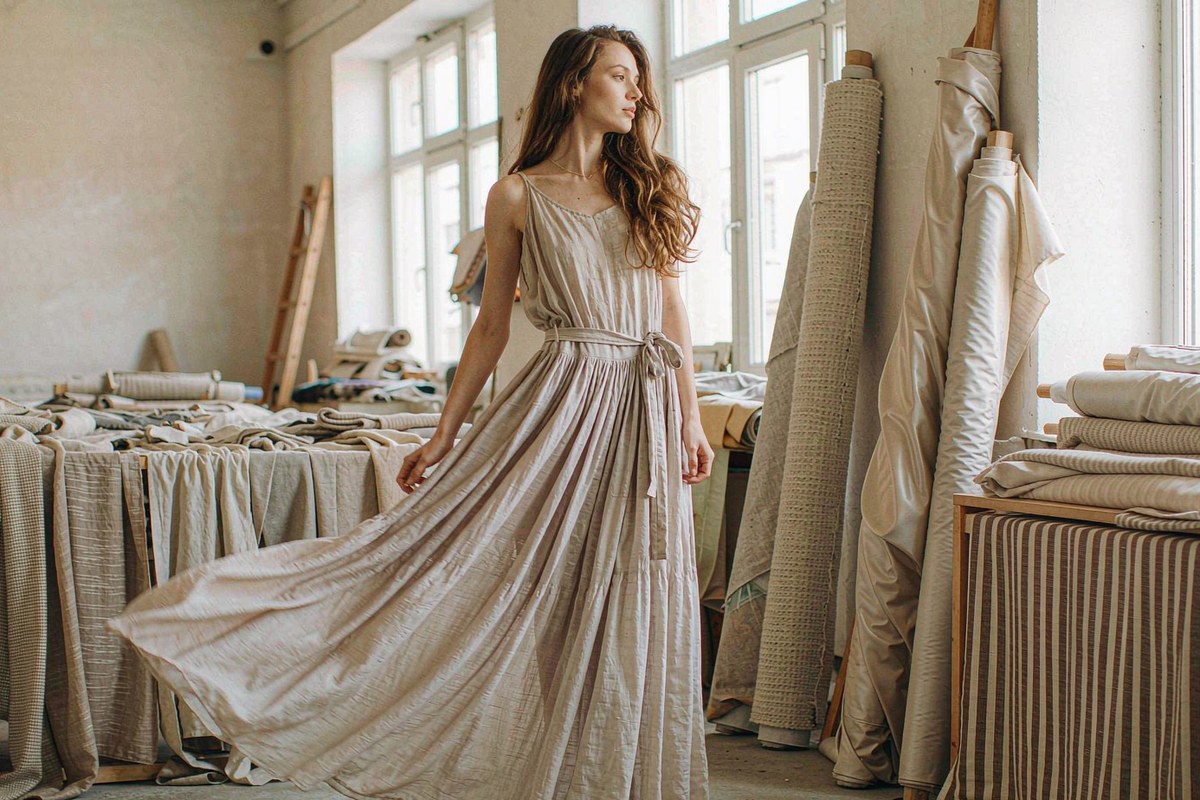
A studio separated from bulk lines: fabric rolls on the table, not a thousand-piece cutting queue.
A Real Case: Rescuing an Australian Resortwear Label
In late 2024, an independent resortwear label out of Melbourne came to us after a catastrophic run with their previous manufacturing partner. They had designed a multi-tiered linen maxi dress with delicate ladder-lace inserts, scalloped embroidery edges and hidden seam pockets. Their previous factory pushed them to 800 units across two colourways. When the shipment arrived:
The issue
The heavy linen dragged on the delicate ladder lace, and the waist seam sagged unevenly by up to 2.5 cm on the hanger.
The cost
The brand pulled 40% of their stock from pre-orders, absorbing an estimated $38,000 AUD in direct inventory loss and delayed fulfilment penalties.
The CHURELLE intervention
Structural rework
Our chief patternmaker rebuilt the internal seam architecture, adding lightweight cotton twill stay-tape to anchor the waist seam directly to the side seams—redistributing the linen's weight without stiffening the relaxed exterior silhouette.
Batch production strategy
Instead of an 800-unit gamble, we manufactured an initial capsule of 80 units per colourway, with a 15-day sample turnaround.
The result
The label sold out its first drop in 11 days with zero returns for drape or seam slippage, then re-ordered 150 units against real-time size and colour demand.
The takeaway is structural: fix the construction before scaling the quantity, then reorder against real demand.
The New Math: Cost per Garment vs. Cost of Unsold Inventory
When brand founders compare quotes for custom dress manufacturing, they usually look at one metric: unit FOB price. That is where most budget forecasts go wrong.
| Production factor | High-volume mega factory | CHURELLE craft atelier |
|---|---|---|
| Typical MOQ | 500 – 1,000 pcs / style | 50 – 100 pcs / style |
| Initial working capital outlay | $15,000 – $25,000+ | $2,500 – $4,500 |
| Deadstock risk exposure | 30% – 50% on unproven designs | Less than 5% |
| Sample iteration cycle | 4 – 6 weeks per revision | About 7 days |
| Fabric versatility | Standard synthetics, stable wovens | Silk, linen, viscose, lace, plissé |
| Hidden cost | Clearance discounting & warehousing | Zero dead-inventory drag |
A mega-factory might quote $16 a piece on an order of 1,000 units while an atelier model sits at $22 a piece on 80 units—but your upfront cash exposure drops from $16,000 to $1,760.
More importantly, you keep your capital liquid. If a design goes viral, you scale up. If it does not resonate, you cut your losses without thousands of dollars locked in warehouse dust.
How to Prepare a Tech Pack for Atelier-Grade Dress Manufacturing
If you are planning your next collection, bridging the gap between your design vision and the factory floor takes precision. This is what a specialist dress workshop actually needs from your tech pack:
Specify seam construction explicitly
Not just "clean finish"—French seams for sheer chiffons, bound seams for heavy linens, blind hems for tailored dresses.
Grainline callouts on drapes
If any part of the dress relies on a true bias cut, mark the 45-degree grainline on the pattern spec so it does not twist after the first wash.
Hardware and stabilisers
List exact interlinings. A placket that puckers around shell buttons is almost always the wrong fusing weight, not poor sewing.
Shrinkage and wash allowances
Get mill testing reports before pattern grading. High-twist yarns and modal blends can contract 5–8% in a post-sew garment wash.
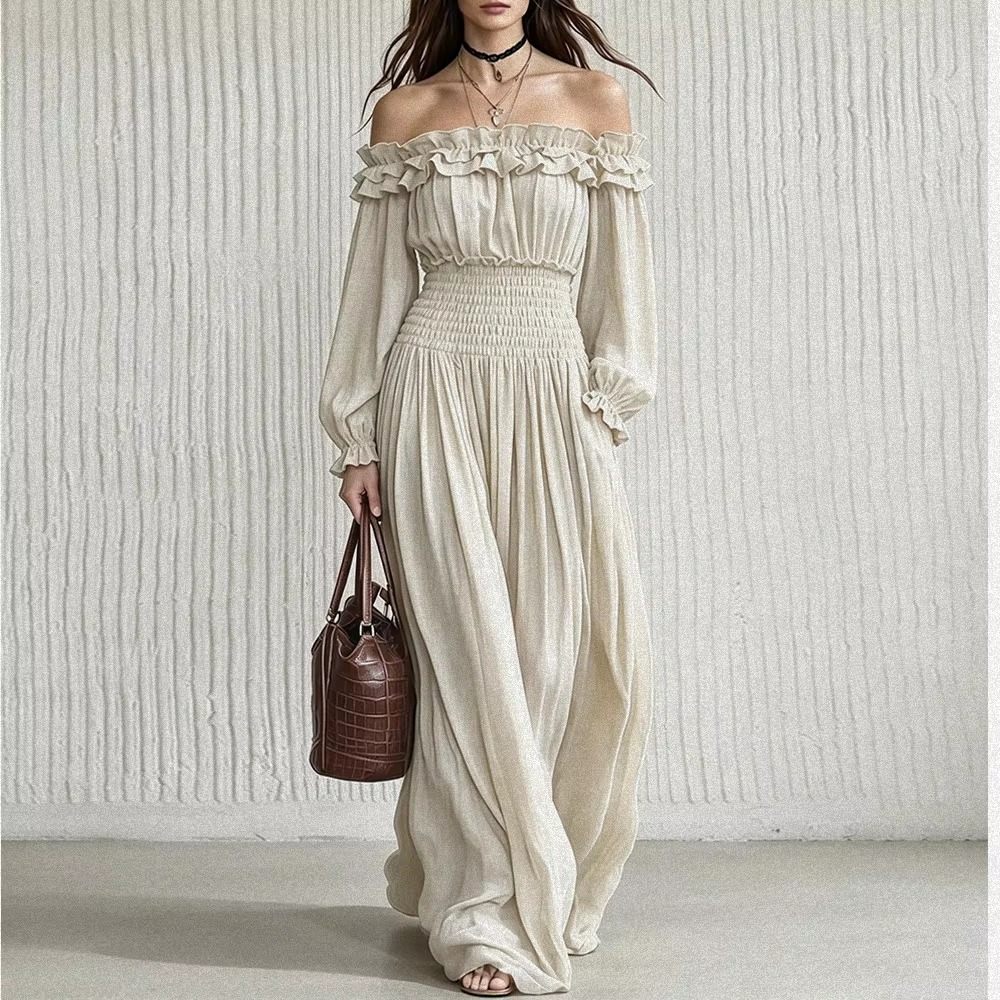
Shirring, gathers and seam placement belong in the tech pack—not in a note after the sample.
Atelier Manufacturing FAQ
Why not just use the cheapest mega-factory quote?
Because unit price is only one line of the budget. A $16 unit price on 1,000 pieces means $16,000 of cash committed before you know whether the design sells; a $22 unit price on 80 pieces means $1,760. The atelier route costs more per garment and far less per mistake.
Can a 50-piece run handle bias cut, lace and delicate fabric?
Yes—that is the reason the studio exists. Fabrics are hand-laid and pinned to hold grain alignment, and the sample-maker who engineers your golden sample stays with the production pod through bulk.
Does the Melbourne case represent a typical order?
It illustrates the method rather than guaranteeing an outcome: diagnose the structural fault, rebuild the seam architecture, then test with a small capsule (80 per colourway) before scaling on real demand. Results depend on the design and fabric.
What terms and inspection apply to a small order?
30% deposit to start, 70% before shipment, paid by T/T, Payoneer, PayPal or X-Transfer (no L/C); the balance is released against the B/L or after inspection. Bulk is checked by AQL 2.5 general sampling, mainly on sewing, measurements and defects.
Do you hold third-party certification?
We hold no third-party certificates such as OEKO-TEX. We self-test key metrics per batch against method standards and share swatch test records with partner clients; when a certificate is required, we suggest requesting the number from the fabric mill and verifying it yourself.
The Takeaway
The modern fashion landscape belongs to brands that move with precision, identity and speed. Mass manufacturing served the retail era of the 1990s; agile, artisan-led ateliers are powering the independent brands of today.
At CHURELLE we did not reinvent the wheel. We just remembered what made dressmaking special in the first place: honouring the drape, respecting the designer's vision, and building a supply chain nimble enough to let creative brands thrive.
Want to test a dress design before committing 1,000 pieces?
Send your sketch or tech pack plus target fabric; we return a broken-down quote within 24 hours.
Request an Atelier Quote